Chapter 2
The Feuerland
A ketch built from 8-centimetre oak planking. 16.20 metres in length. 98 years on the water.
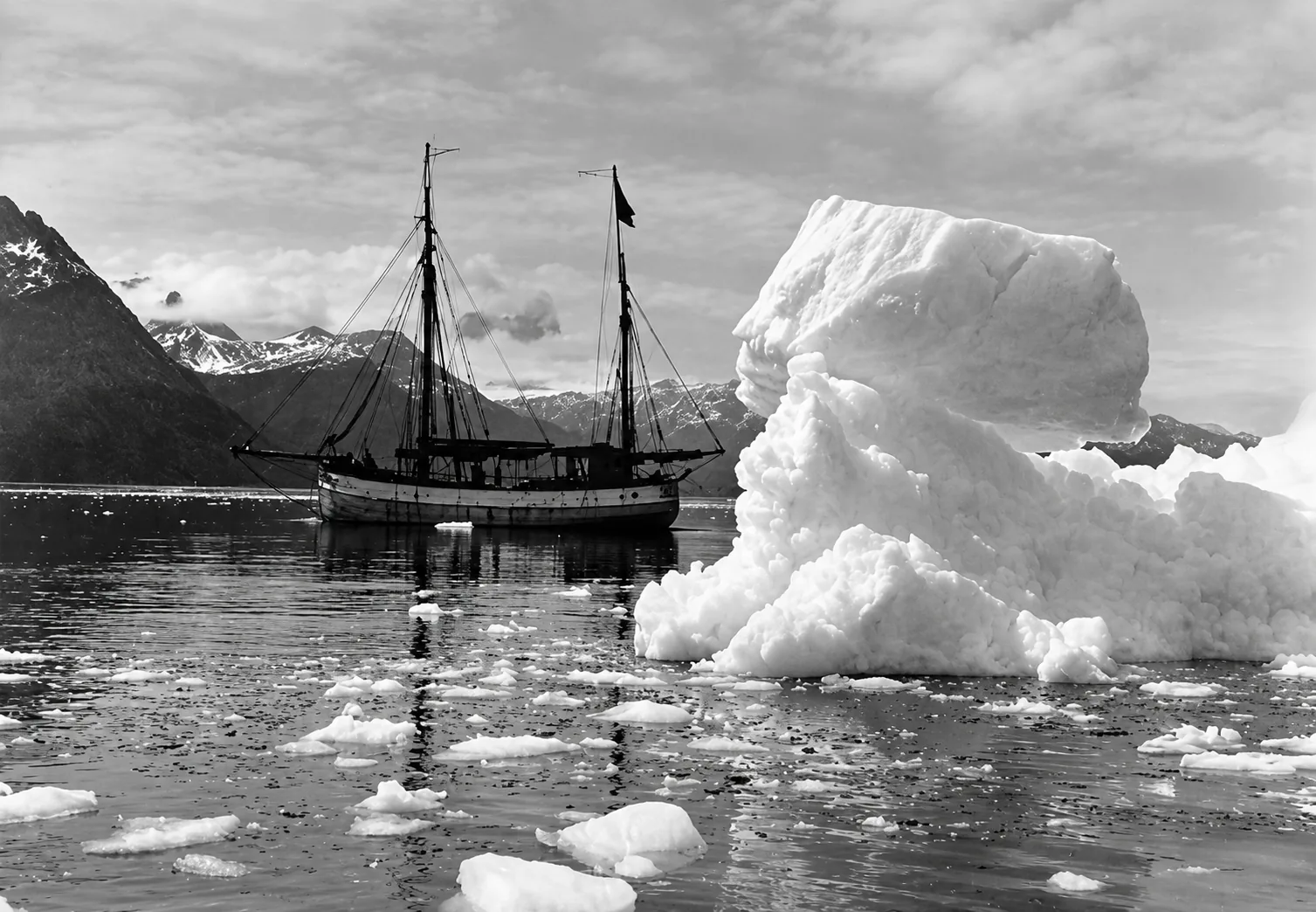
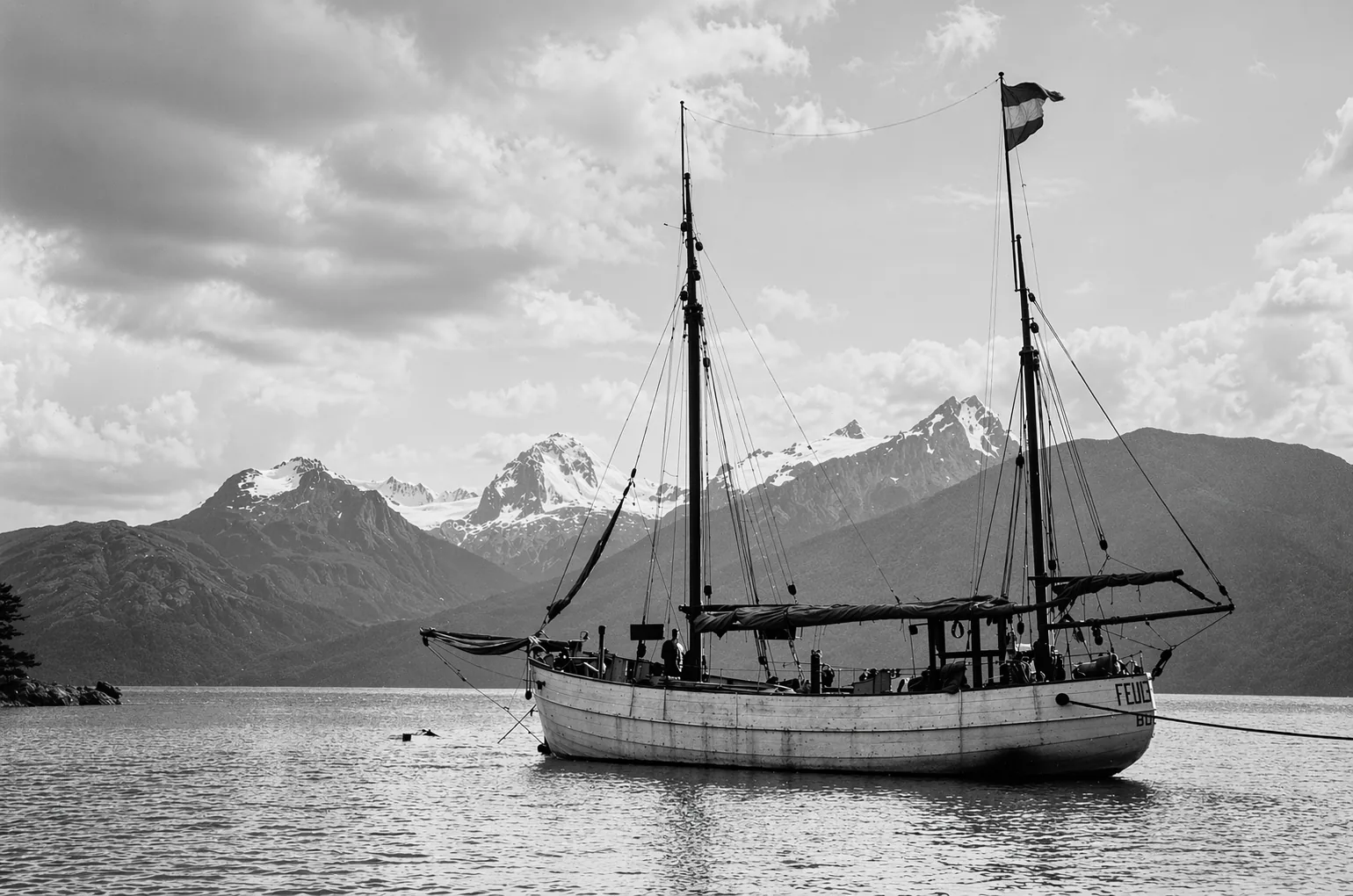
At the Krämer, Vagt and Beckmann yard in Büsum, on the morning of 27 November 1927, a vessel was launched that had not been built for the North Sea. 16.20 metres in length, 4.88 metres in beam, 1.90 metres draught. A two‑masted ketch — that is, a sailing vessel with the mainmast forward and a smaller mizzenmast aft. The man who commissioned her knew the storms his ship would sail into. He had the construction over‑engineered in several respects.
Construction
The oak planking at the waterline — where the vessel most frequently met ice and drifting timber — measured eight centimetres in thickness. On a fishing vessel of this size, three or four would have been standard. The frames were spaced every 55 centimetres, as closely set as on an early-1920s icebreaker. Interior lining and substantial stringers lent the hull additional rigidity.
The materials: oak wood for the hull and frames, pitch pine for the deck. Both timbers are resistant to salt water and tend to contract rather than warp under moisture. The ship was built to survive Plüschow's ice routes off Tierra del Fuego.
Büsum – Punta Arenas
On 27 November 1927 the Feuerland put to sea. Plüschow and his crew made for Punta Arenas, at the entrance to the Strait of Magellan. They reached the harbour in 1928. What followed is described in detail on the page Germany, Patagonia. To return to the ship's history: in 1929, after Plüschow's second expedition, the funds were exhausted. Plüschow sold the vessel to cover fuel and the return passage.
"Penelope" — the second identity
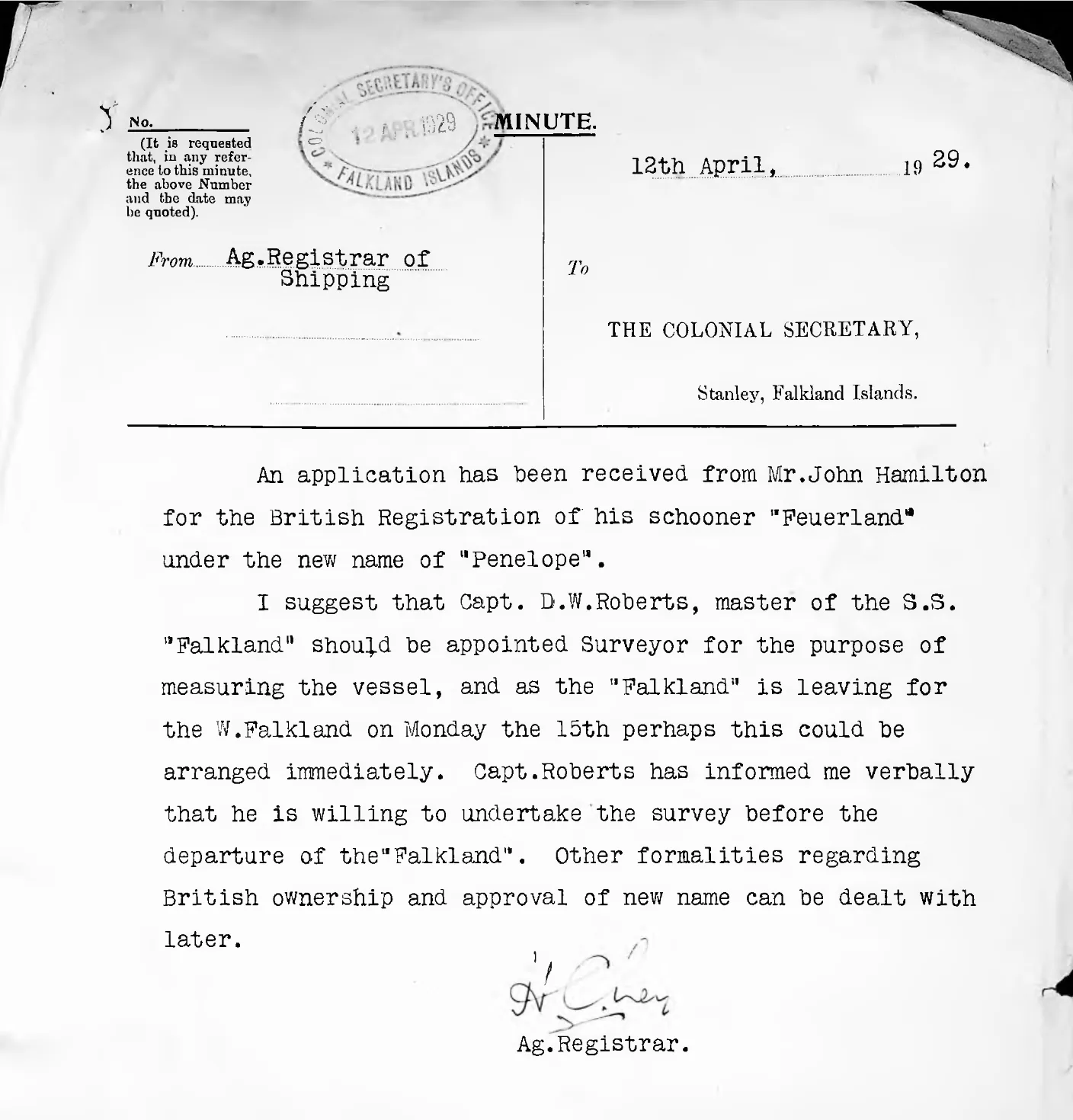
The buyer was an English sheep farmer with holdings in Argentina, Chile and the Falkland Islands (Malvinas). He renamed the vessel after his daughter's first name: Penelope. What Plüschow had built as an ice-research ship became a supply boat for remote sheep stations. A second career under the British flag.
In 1946 the Falkland Islands Government purchased the Penelope. In 1968 it passed to the Falkland Islands Company, which operated her until 1982. That year she was requisitioned by the Argentine Navy — the Falklands War had begun. She carried troops and fuel. Further details appear on the Three Generations page.
The ship was Plüschow's last precise plan. What followed him was history, no longer construction.
2003 — Chance Discovery
In 2003 a Hamburg captain by the name of Bernd Buchner was serving as navigation officer aboard a small expedition cruise ship in the Falkland Islands. He spotted a wooden vessel that reminded him of descriptions in Plüschow's books. It was the very vessel. Buchner purchased the ship and brought her back to Germany.
While slipping the vessel at a small shipyard, Buchner examined the oak planking. Despite seventy-five years of salt water and several changes of ownership, the wood below the waterline was in remarkably good condition. Only individual plank seams needed re-caulking. Buchner resolved to sail the ship home under her own canvas.
2006 — Homecoming to Büsum
In April 2006, with five volunteers on board, the Feuerland sailed from the Falkland Islands to Büsum. Seventy-nine years after her launching. The voyage lasted several weeks. In July 2006 the Friends of the Feuerland Expedition Ship Association (Förderkreis Expeditionsschiff Feuerland e. V.) was founded in Büsum — a society that took the ship into its care and prepared her restoration.
Timeline
98 Years on the Water
2007–2025 — the long road to the end
In 2007 the actual restoration began in Hamburg-Harburg. Over several years, planking and frames were repaired, mast hardware replaced, deck timbers renewed. In 2018 the ship transferred to Museumswerft Flensburg. There, a sober assessment followed: a complete rebuild would be required to return the ship to seaworthiness. The funds for that were not available.
In August 2025 the Feuerland was completely broken up in Flensburg. Parts of the oak planking remained as remnants at Museumswerft Flensburg. One truckload of refined remnants was taken on by the Moorschmied Manufactory. The timber is held today in its workshops and forms the point of departure for the continuing work documented on the page Acquisition.
98 years on the water — the longest career any German wooden expedition vessel of this class has ever had. The Feuerland spent more of her life as a Penelope than as a Feuerland. She served under British and Argentine colours more than twice as long as under German.