Chapter 6
Three Generations
Benhorst Schröppe 1962 + 1971 — Wolf-Dieter Schröppe 2020 → 2026 — Wieland, Weking and Reinhard today. The Moorschmied Manufactory's connection to Plüschow's land is no coincidence.
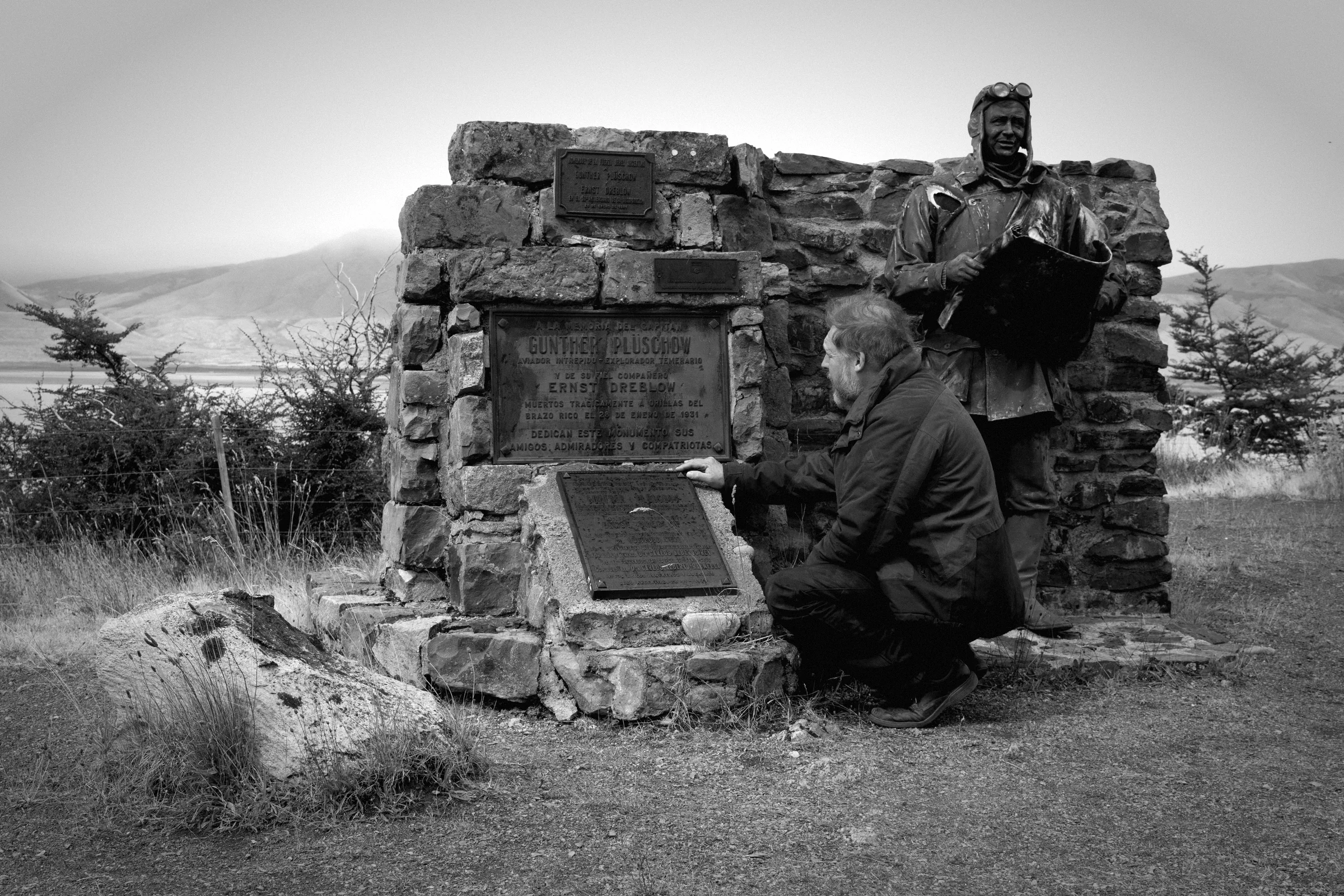
That the Moorschmied Manufactory works with timber from Plüschow's ship is a logical extension of a family history that began roughly fifty years before the Feuerland's planks were broken up in Argentina. Wolf-Dieter Schröppe, senior of today's Moorschmied Manufactory, was born in Buenos Aires in 1962. His father Benhorst Schröppe attended the handover of the first bronze commemorative plaque to a youth group from Germany, which built a first memorial to Plüschow at the crash site on Lake Argentino. In 1971 he was involved in the inauguration alongside representatives of the Argentine government and the German Embassy.
First Generation
Benhorst Schröppe — 1962 and 1971
Benhorst Schröppe was present at the handover of the first commemorative plaque — prepared by a singing circle in Buenos Aires under Lothar Herold — to the youth group of the Nerother Wandervogel (German youth movement, founded 1921), which in 1962 built the first memorial near the site of Plüschow's crash at Lake Argentino. Nine years later, in 1971, he took part in the inauguration of that memorial, attended by representatives of the Argentine government and the German Embassy. Eyewitnesses from the region around Lake Argentino were also present.
During the 1970s he gave a slide lecture on Patagonia in Argentina — with Plüschow as the point of reference and the ship Feuerland as the vanishing point. The title he borrowed from Silberkondor über Feuerland, Plüschow's book published in 1929: "Dust and dirt — and crystalline purity." The lecture survives in full: two reel-to-reel tape spools with audio, several hundred slides, handwritten cue cards. In total, approximately four hours of material. The Manufactory has preserved the archive in its entirety and will make it accessible to a wider public as part of the film project.
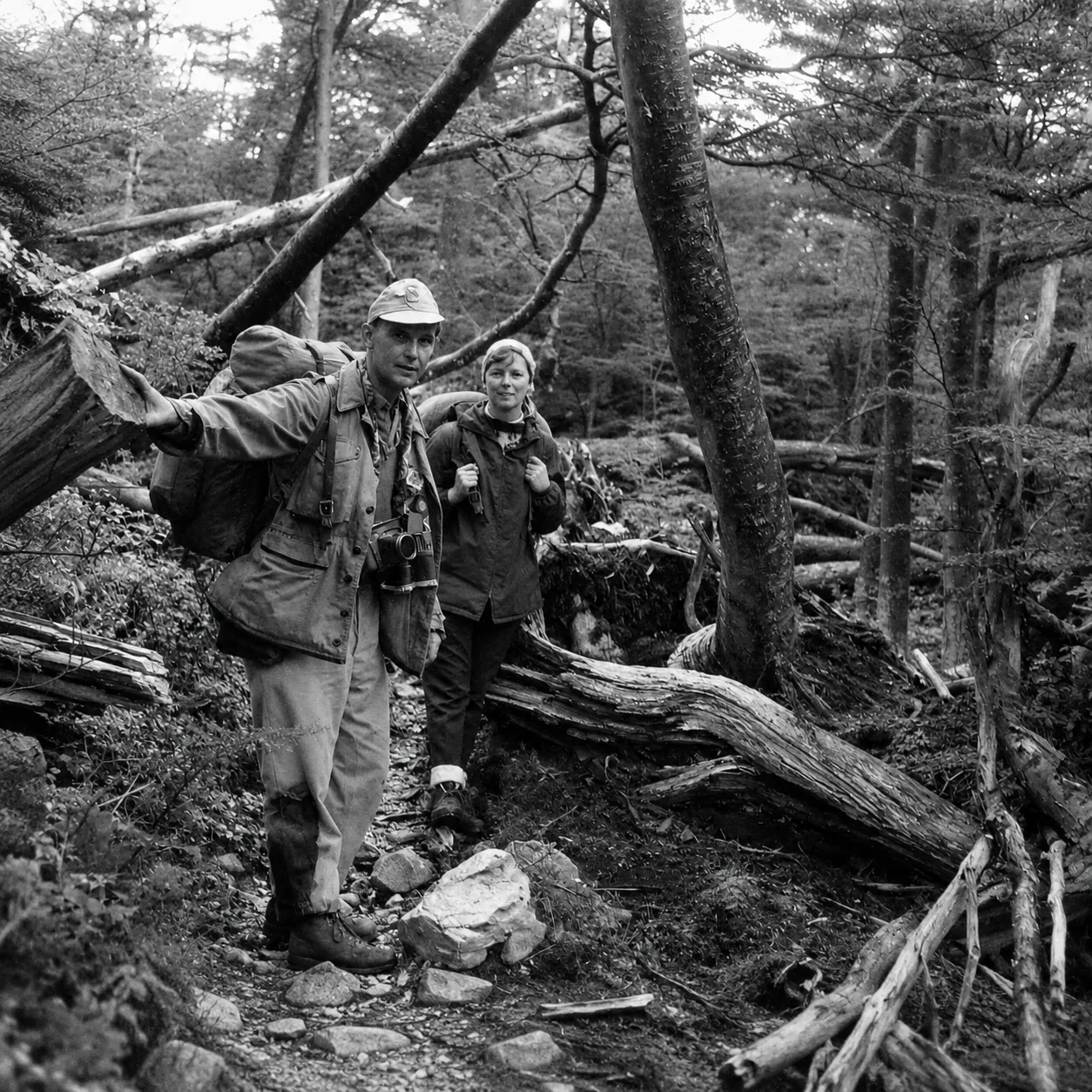
"Dust and grime — and crystalline purity."
Patagonia — sometimes one way, sometimes another.
— Plüschow, 1929. Lecture title used by Benhorst Schröppe in Argentina, 1970s.
Second Generation
Wolf-Dieter Schröppe
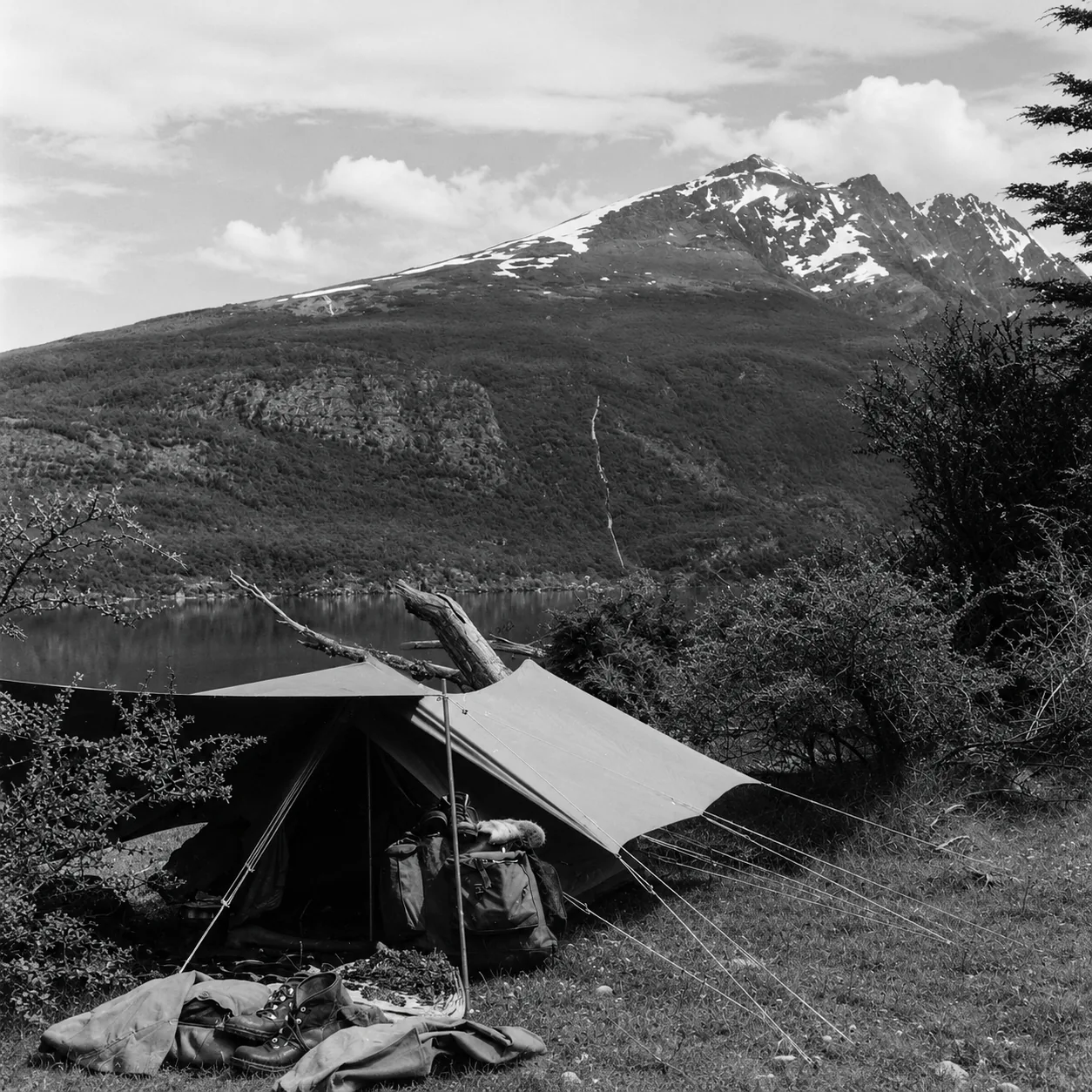
Wolf-Dieter Schröppe, senior of today's Moorschmied Manufactory, was born in Buenos Aires in 1962. From that period comes an extensive family photographic archive: high-resolution images from Patagonia in the 1960s and 1970s.
The family later returned to Germany. Yet Argentina remained a second frame of reference — in stories, in correspondence, in the reel-to-reel recordings of music and voices that his father Benhorst brought back from his travels to Patagonia. Wolf-Dieter himself remained an enthusiastic Patagonia traveller. From his journeys between 2020 and 2026 — encounters in Ushuaia, at Brazo Rico, in Santiago de Chile — a new lecture is currently taking shape, one that continues where his father's historic slide presentation left off.
Third Generation
Wieland, Weking and Reinhard
The third generation comprises Wieland and Weking Schröppe and Reinhard Herrmann. These three younger members of the Moorschmied Manufactory are equally enthusiastic travellers and adventurers — very much in the spirit of their fathers and, in the broadest sense, of Gunther Plüschow himself. They tend and safeguard the material from the Feuerland, carefully working through the archive, the film footage, and ultimately the wood for knife handles.
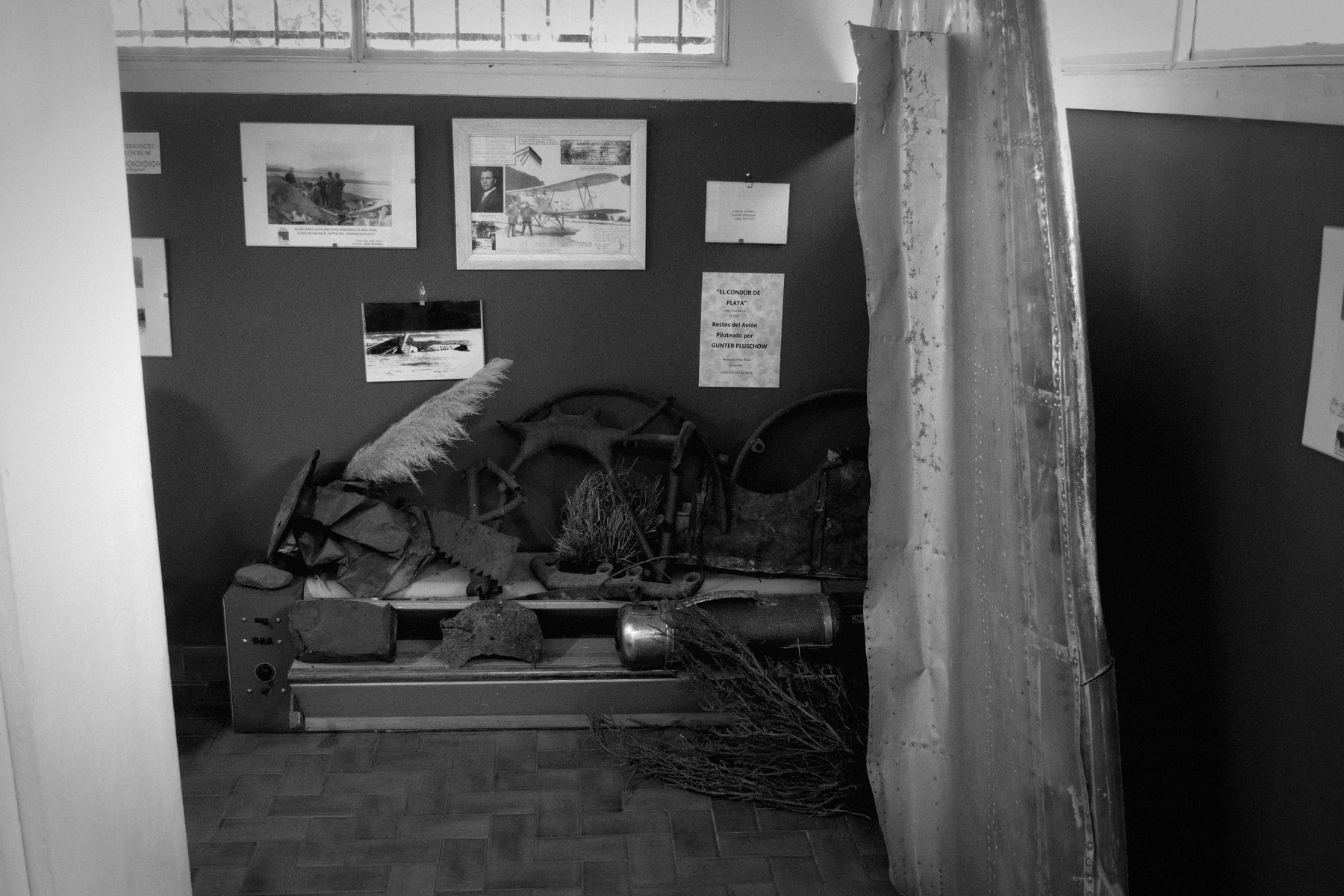
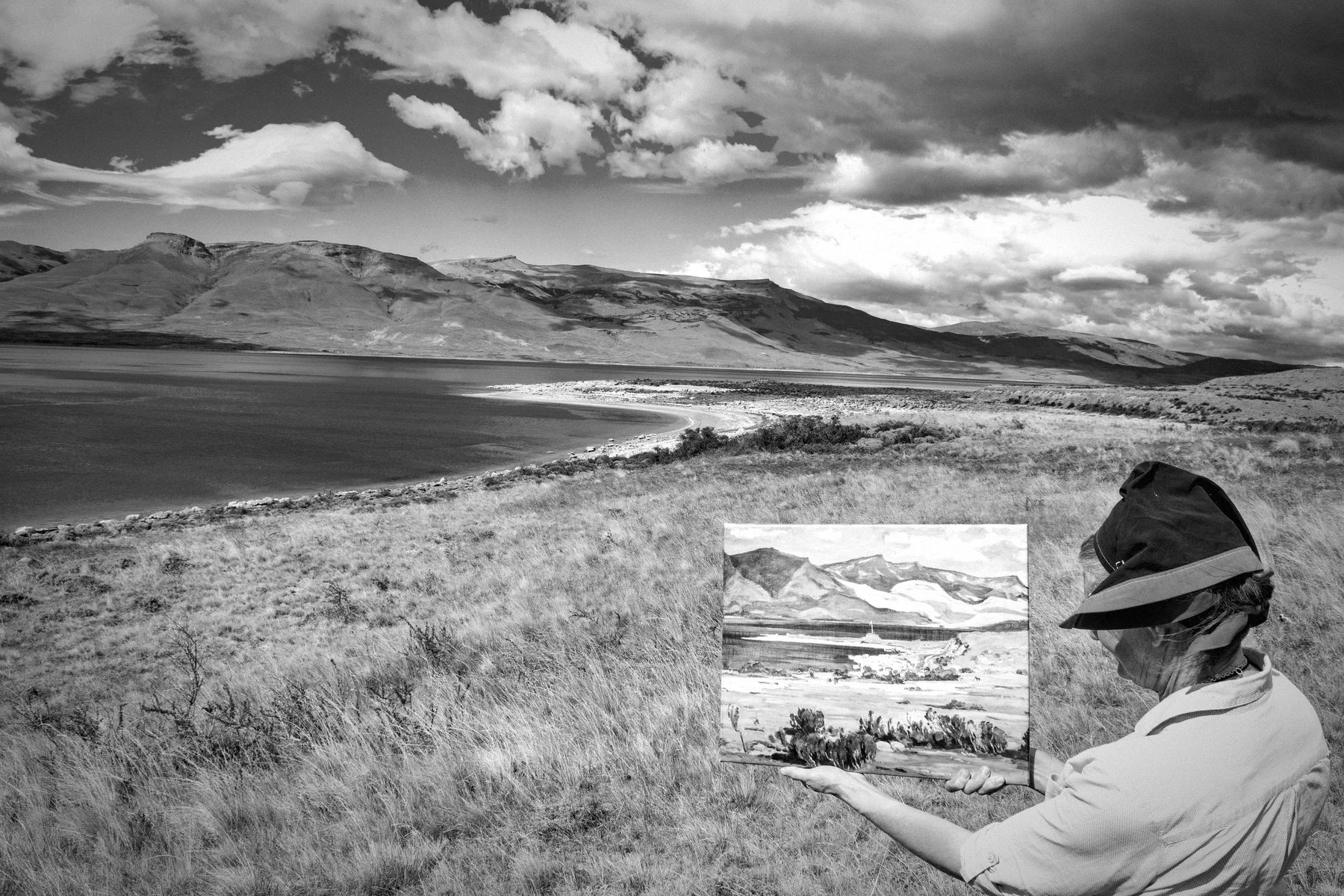
Tracing the Silberkondor today — from the Calafate Museum to Tsingtau Bay on Lake Sarmiento.
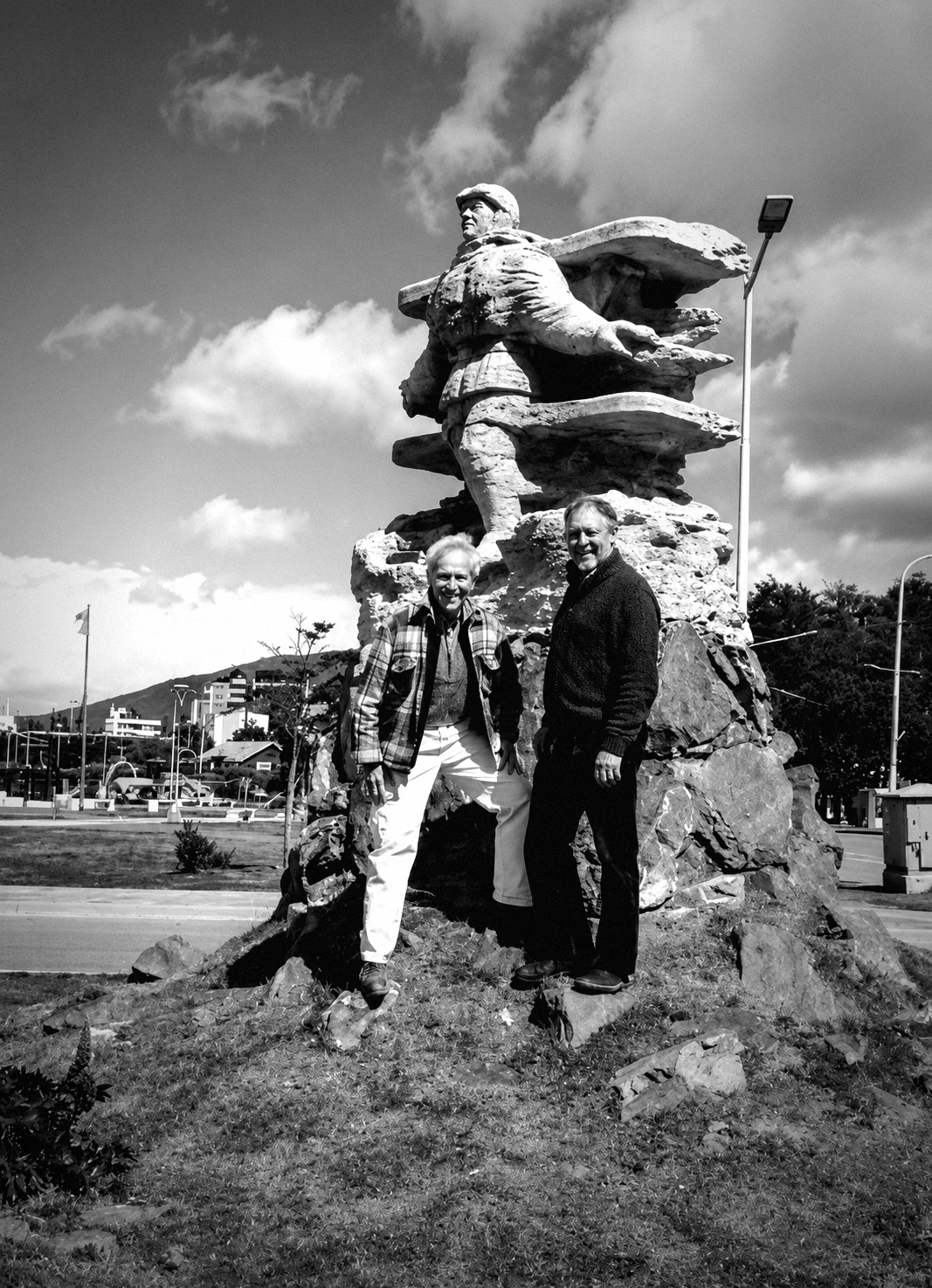
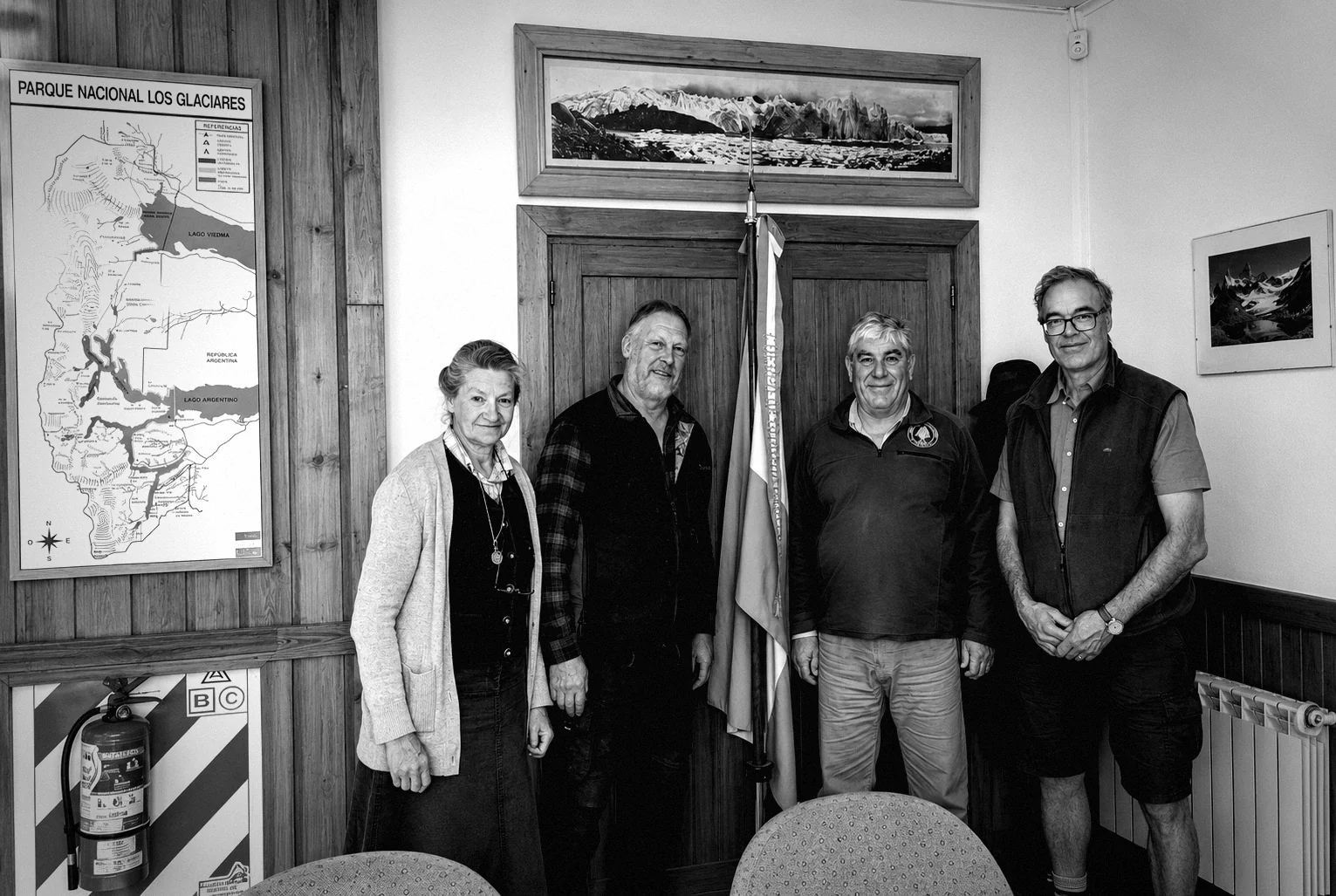
The connection is being maintained — both diplomatically and in substance.
The Splinter
There is a story that connects the ship directly to the Schröppe family. The Argentine naval veteran Roberto Herrscher was not a career soldier during the Malvinas War of 1982, but an ordinary conscript. His knowledge of English led to him being taken to the islands to serve as an interpreter. Aboard Penélope, the former Feuerland, he was deployed as a soldier throughout the weeks of the conflict, and witnessed the transport of all manner of goods under wartime conditions.
Herrscher later wrote a book about that period, Los viajes del Penélope. In it he also recalls a British Harrier attack on the vessel, during which the mast was damaged. A splinter from that mast narrowly missed him. Herrscher describes it as extraordinary good fortune that he did not lose his life that day.
Among the remains of the ship recovered from the Museumswerft Flensburg was the mast. Behind a sheet-metal guard, fragments were still found — the traces of the damage that had so nearly cost the young conscript Roberto Herrscher his life.
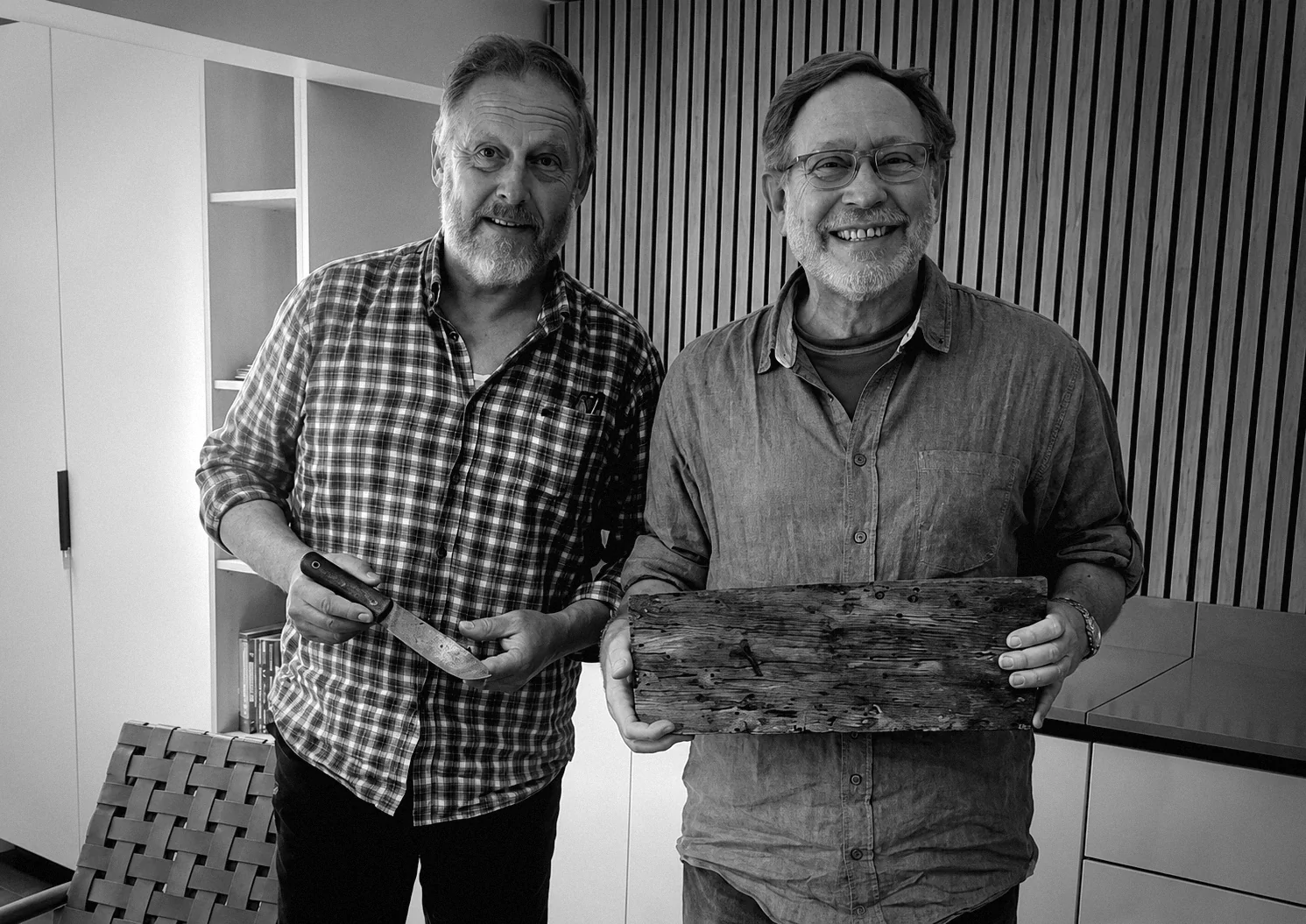
Wolf-Dieter Schröppe, likewise born in 1962 and himself called up at the time of the war, though not a combatant in the Falkland Islands (Malvinas), visited Roberto Herrscher in Santiago de Chile on 2 March 2026. At that meeting, Herrscher was presented with a piece of timber from the Penélope, the former Feuerland of Gunther Plüschow, as a keepsake of that formative time.
What Sustains the Connection
Three generations, three lectures, three voyages to the End of the World. A splinter from the mast.
What Gunther Plüschow documented in the years 1927 to 1931, what the grandfather presented in a slide lecture in 1970, what Wolf-Dieter Schröppe experienced on his travels through Patagonia and learned in Ushuaia and at Brazo Rico — all of this comes together today in the workrooms of the Manufactory.
The connection to the Manufactory is not a marketing pose. It is a documented biographical relationship that has grown over decades across two continents. Those who carry the timber of the Feuerland carry a piece of that connection with them.