Chapter 5
The Wood Comes Home
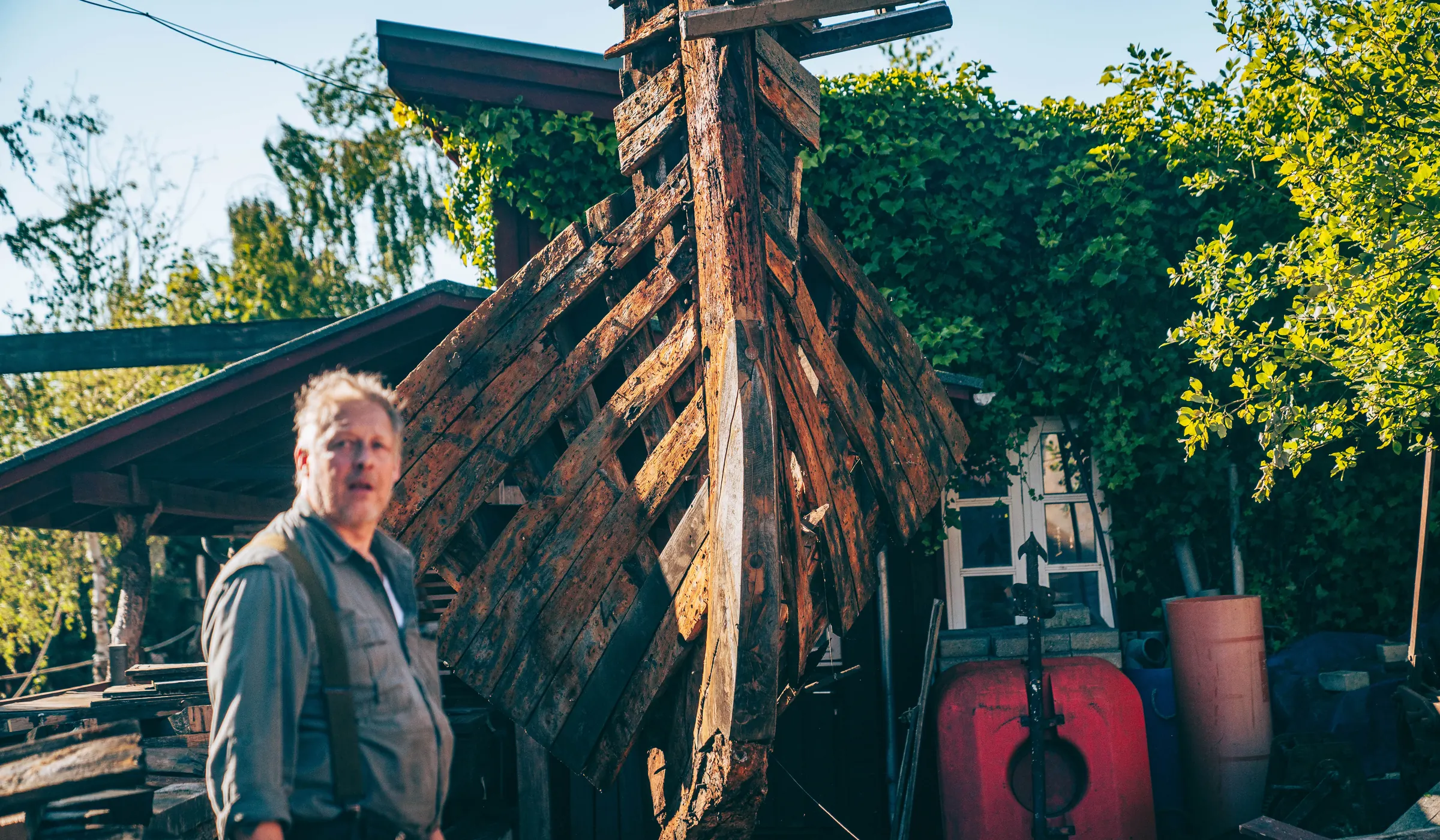
Museumswerft Flensburg, August 2025. What remained at the end of the vessel's 98-year history lay in a shipyard in northern Germany.
In August 2025, a pile of wreckage stood in the yard at Museumswerft Flensburg. The dismantled oak planking of the Feuerland. Oak from 1927, nearly eight decades in saltwater, almost two decades of restoration — everything in pieces from board-length down to cut timber. The buyers of the Feuerland had already taken most of it away. What remained was destined for the wood chipper.
The Phone Call
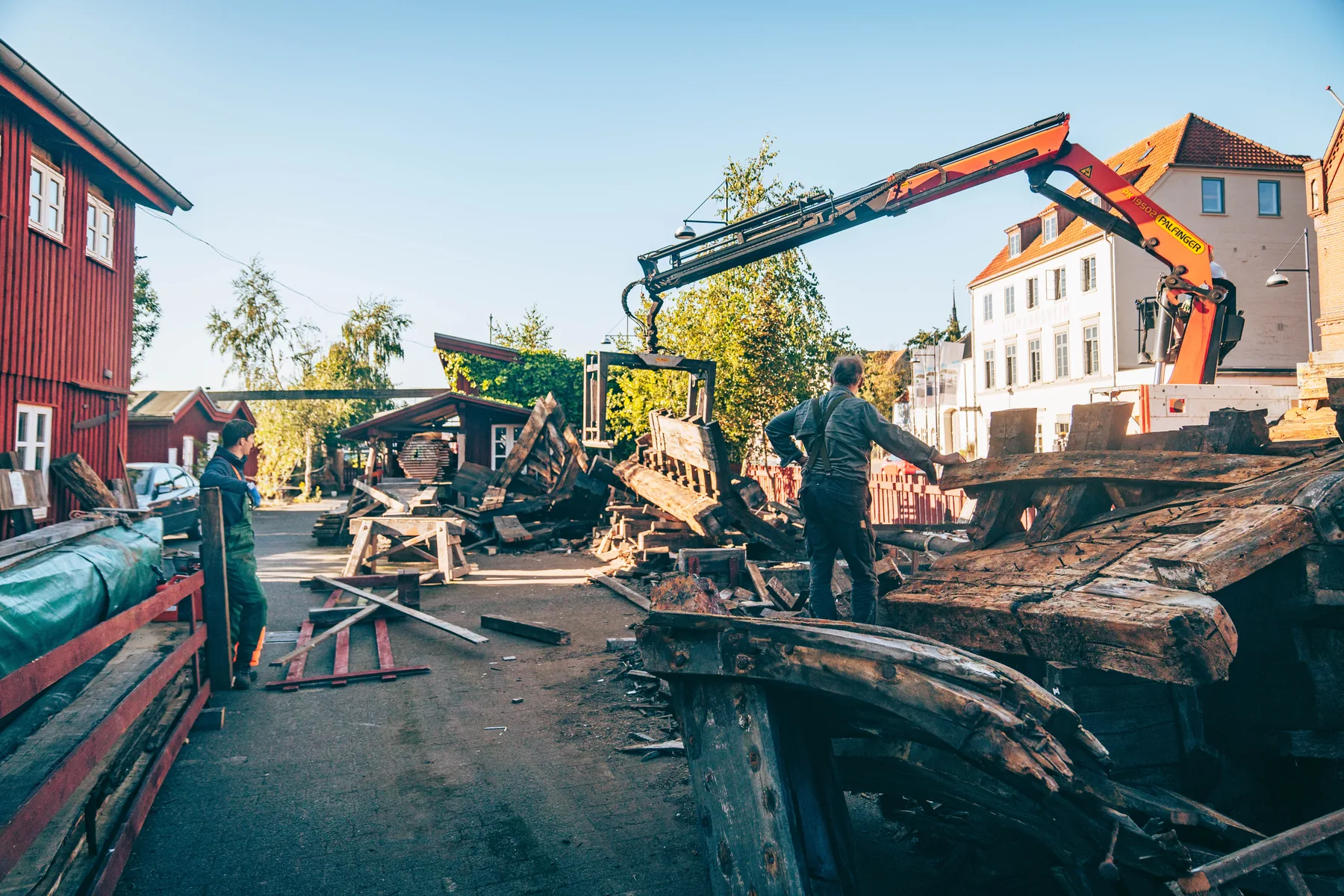
Before the Manufactory arrived at the shipyard, there was a phone call. A member of staff at Museumswerft Flensburg had been in touch — through a mutual acquaintance in the northern German shipbuilding scene. He knew the Moorschmied Manufactory; he knew what it made from historic timber. He had held back pieces of the Feuerland — refined remnants that had remained at Museumswerft Flensburg. They could have them if they would come for them.
The Manufactory came. With a lorry.
Selection
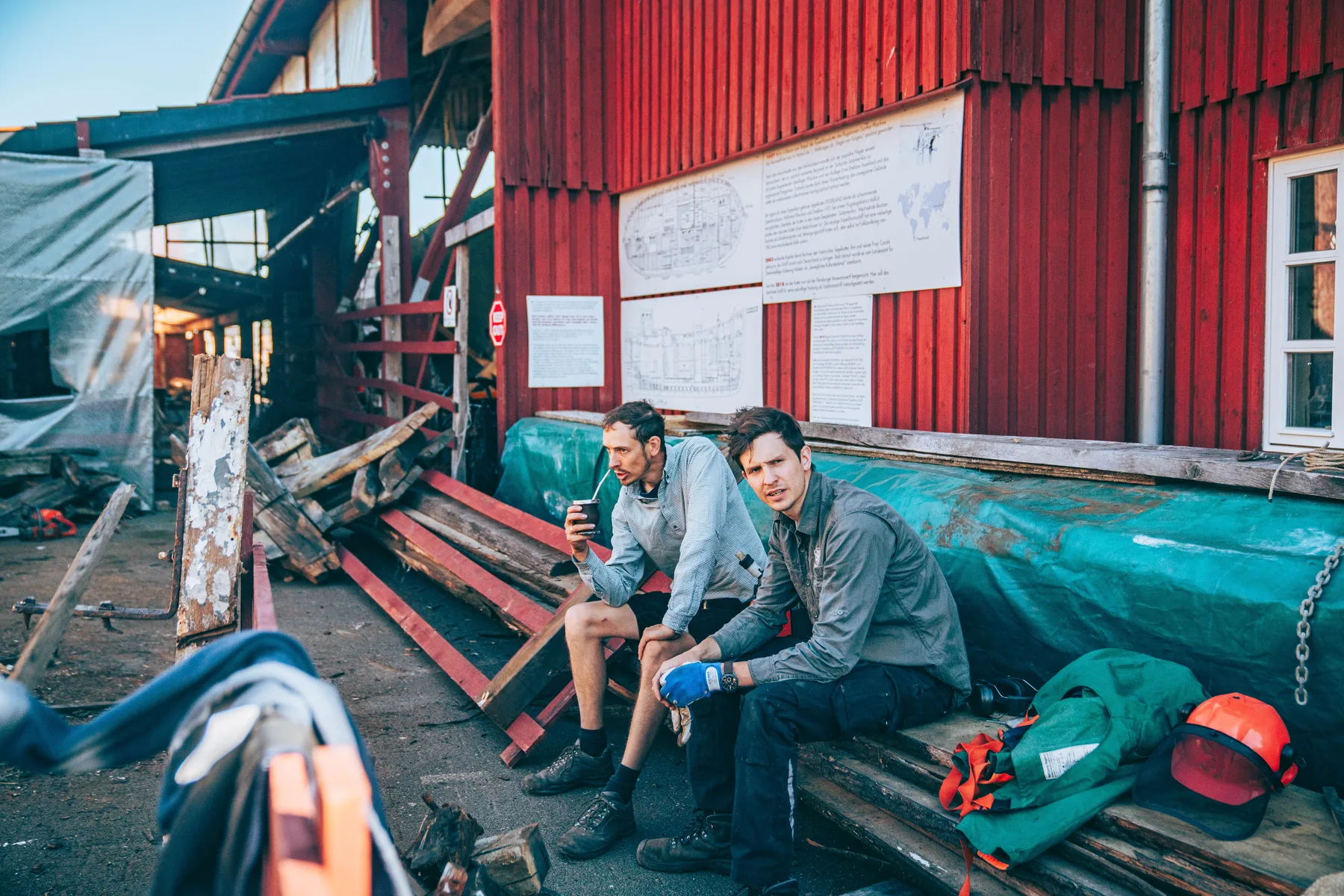
Ship timber of this class is not uniform. Some pieces are rotten from saltwater ingress, others warped by inadequate drying, others structurally unstable due to old repair work. What the Manufactory looks for: pieces from the original 1927 planking, without visible repair layers, with even, close-grained timber.
Museumswerft Flensburg indicated which timber was available; the selection was carried out by the Moorschmied Manufactory. Pieces 50 centimetres or more in length with unbroken grain were retained for handle stock. Offcuts below this class are suited to knife handles or folders.
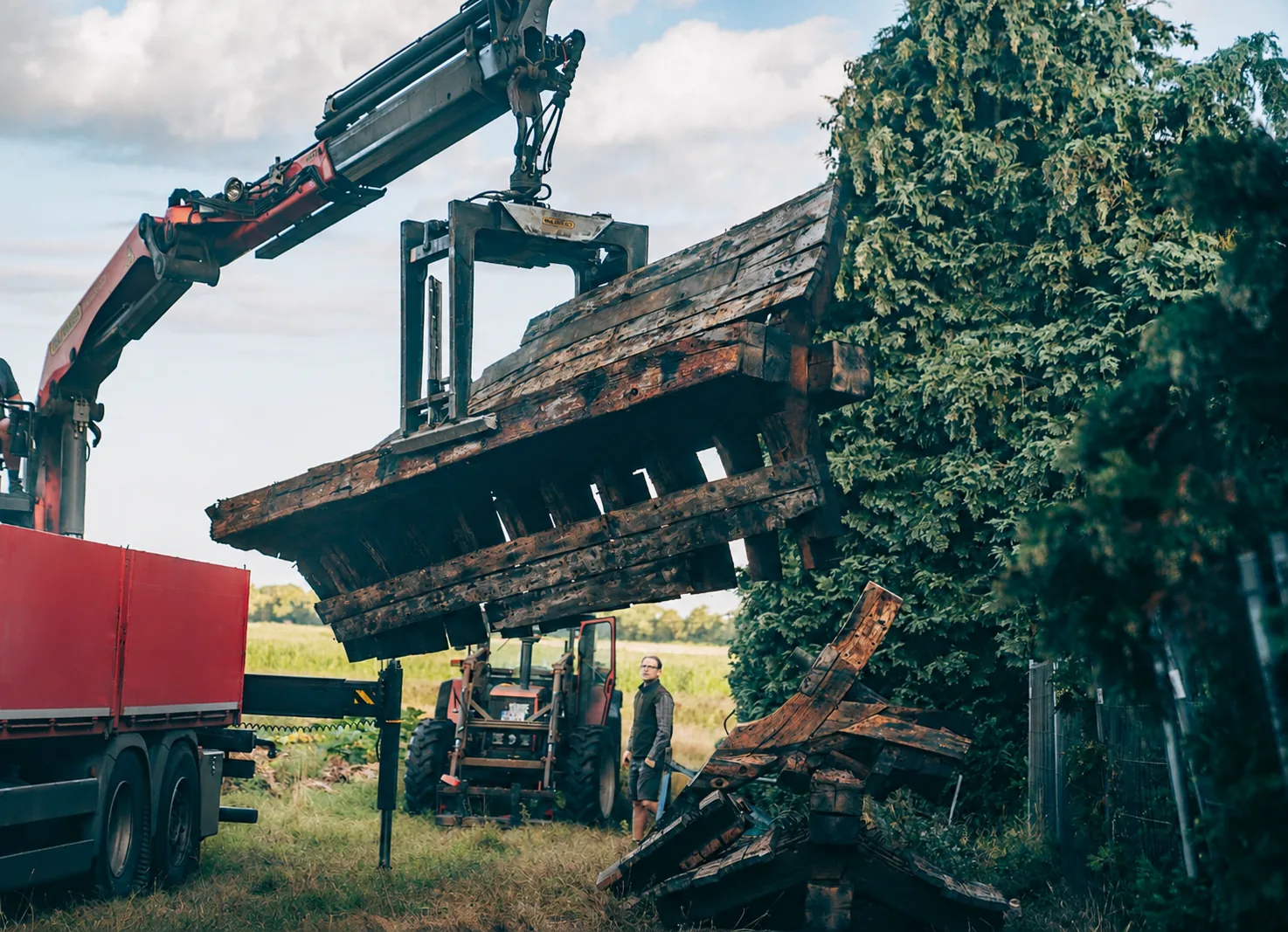
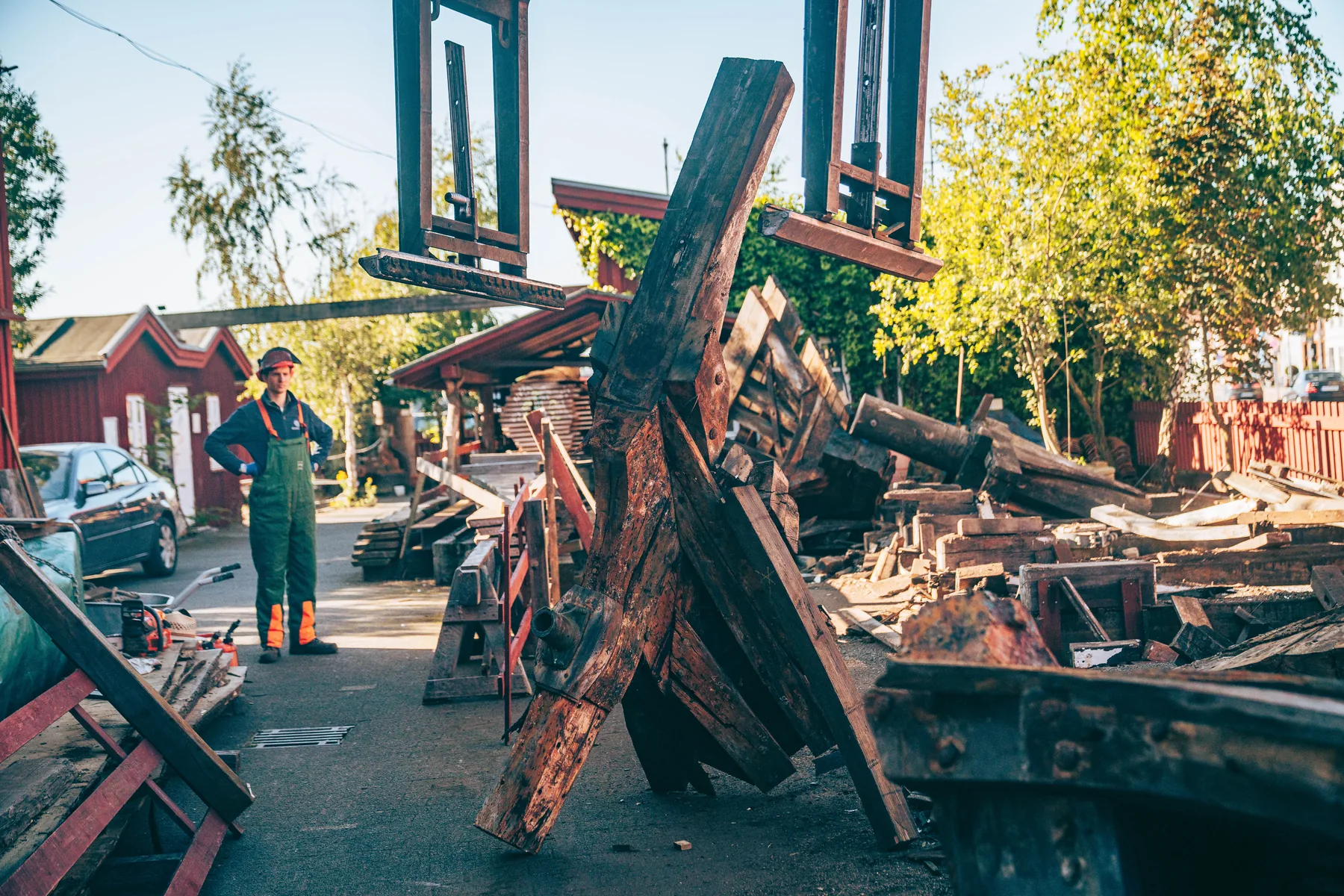
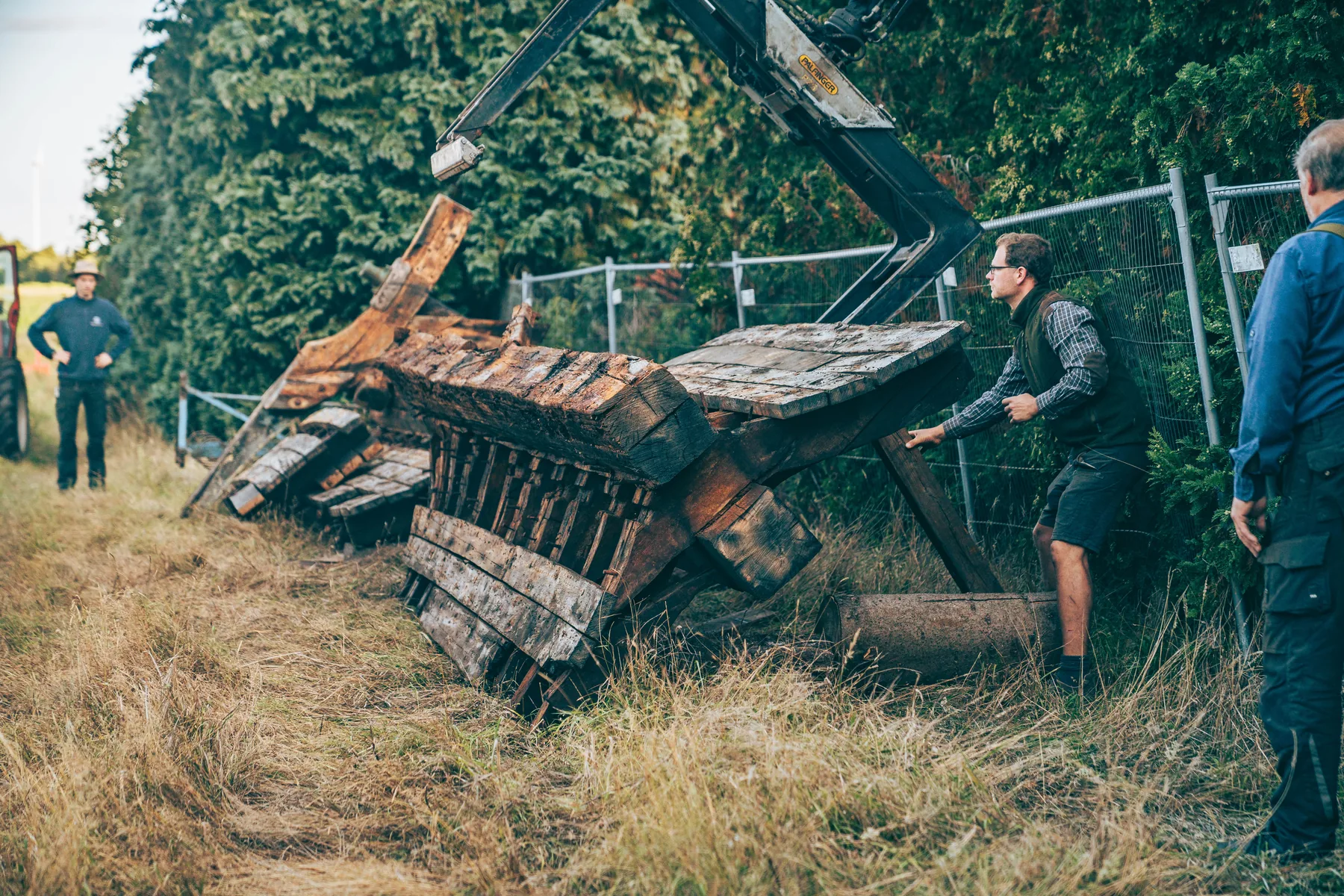
From the shipyard in Flensburg to the Manufactory's workshops.
One truckload
The quantity is stated plainly: one truckload of oak planking. What that represents in volume depends on the geometry of individual pieces — a detailed piece‑by‑piece inventory was carried out in the workshops after delivery. It forms part of the provenance dossier.
What it means in practice: the Manufactory holds a stock of material sufficient for several years of work. Whatever emerges from it will be documented on this page as the work progresses.
"It was not that we had asked for the timber. The timber asked for us — through a member of the shipyard's staff who knew who we were."
Storage
The timber has been held in the workshops of the Manufactory since September 2025, in a protected storage area where it can acclimatise under controlled conditions. Every piece has been numbered, photographed, and measured. The photographic record forms part of the provenance dossier, which is available for inspection upon request.
Processing begins selectively. The first individual knives have already been made. The main body of work will continue over several years.
Provenance
Photographic provenance confirmation and documented provenance reference to the ship Feuerland (Q1409581 on Wikidata).
The Manufactory also documents the prior history: the initial contact, the loading logistics, the delivery to the workshops, and the piece-by-piece inventory. The dossier is not publicly available. Those wishing to view it may enquire via the Contact form.
A handover at a shipyard in Flensburg, a member of staff who recognised the value of the timber, a lorry, the Manufactory's workshops — what stood at the end of a 98‑year ship history was an unremarkable logistical event. The Manufactory recalls it without pathos.